
Tokyo Python Good Vibes: Games, Notebooks, and a Little AI
Eugene Kim and Tokuro Hata explored Pyxel, Marimo, and AI-assisted development at our October meetup at Le Wagon Tokyo.
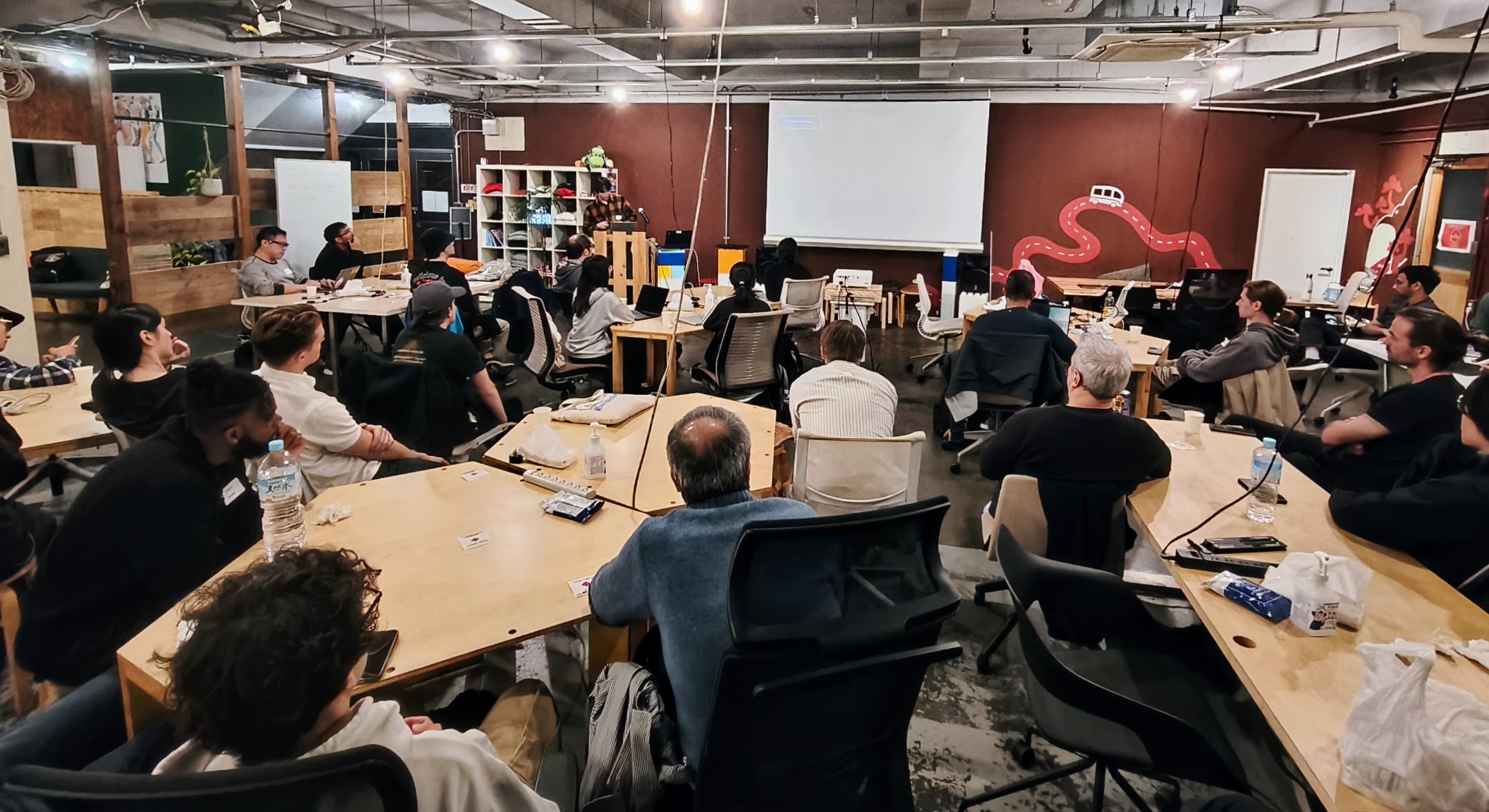
October 28, 2026 | Le Wagon Tokyo, Meguro
After almost three months since our previous meetup, Tokyo Python returned to Le Wagon in Meguro on October 28 for an evening exploring two very different sides of Python: retro game development and interactive notebooks.
With a venue close to capacity, it was wonderful to see so many familiar faces, along with plenty of newcomers to the Tokyo Python community.
Our speakers, Eugene Kim and Tokuro Hata, introduced us to two exciting Python projects, Pyxel and Marimo. Although their subjects were quite different, a common theme emerged throughout the evening: the growing role of AI in software development, and how the right tools can help developers turn ideas into working applications more quickly.
Eugene Kim: Building Retro Games with Pyxel
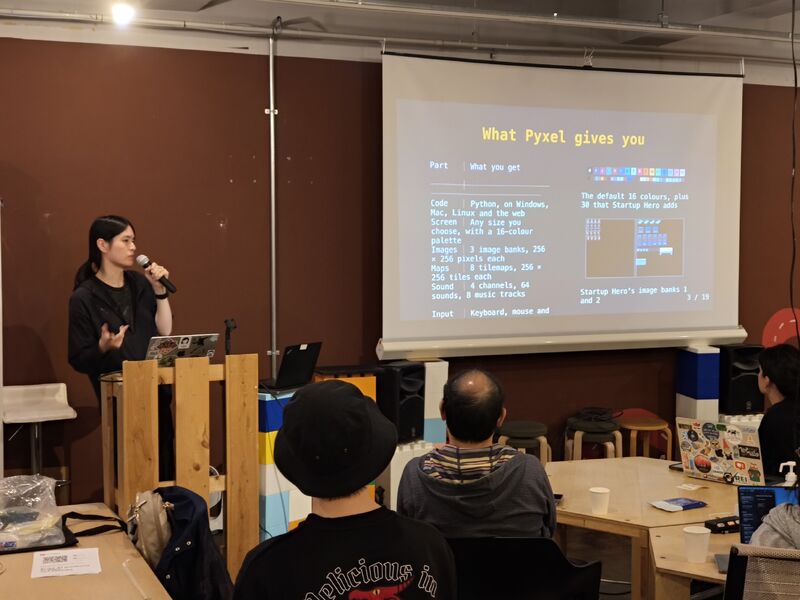
Our first speaker, Eugene Kim, introduced us to Pyxel, a retro game engine for Python developed by Japanese software engineer Takashi Kitao.
Pyxel takes inspiration from the limitations of classic gaming hardware, offering a deliberately constrained environment for creating pixel-art games. With its retro graphics, sound effects, and straightforward Python API, it provides an accessible way to explore game development without the complexity of a modern game engine.
Eugene’s talk was inspired by Takashi Kitao’s keynote at PyCon JP 2026 in Hiroshima, where Kitao demonstrated the creative possibilities of Pyxel.
Building on that inspiration, Eugene explored how Pyxel can be used alongside modern AI tools to accelerate game development. From creating sprites and other game assets to experimenting with gameplay ideas, AI can help developers move more quickly from concept to prototype.
But the discussion also highlighted an important distinction: generating code or assets is not the same as understanding how a game works. Developers still need to make decisions about design, gameplay, and how the different pieces fit together.
It was a reminder that Python remains a wonderful language for creative experimentation, and that sometimes working within a few constraints can be part of the fun.
Tokuro Hata: Rethinking Python Notebooks with Marimo
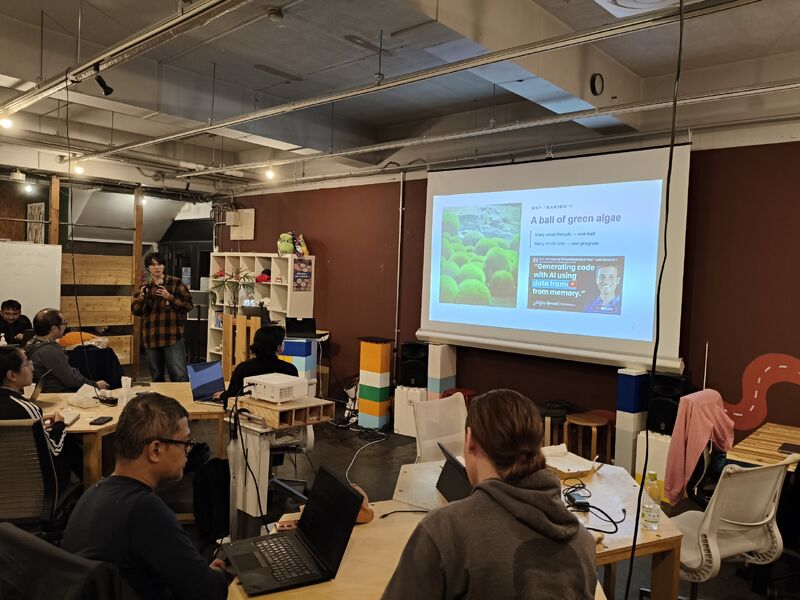
Our second speaker, Tokuro Hata, introduced Marimo, an open-source reactive Python notebook that’s attracting growing interest in the Python community.
For many Python developers, notebooks have become an essential tool for data analysis, experimentation, and sharing results. But traditional notebooks also have their frustrations. Cells can be executed out of order, variables can retain unexpected values, and reproducing someone else’s work isn’t always straightforward.
Marimo approaches these problems differently.
Rather than treating cells as independent blocks of code, Marimo tracks dependencies between them. When a variable changes, dependent cells automatically update, helping keep the notebook’s state consistent.
Marimo also makes it possible to build interactive applications directly from notebooks, bringing together Python code, visualisations, and user interface elements in a single environment.
Tokuro-san explored these capabilities and showed how AI tools can complement the notebook workflow, making it easier to experiment, explore data, and develop ideas.
For anyone familiar with Jupyter notebooks, Marimo offers an interesting alternative, particularly when reproducibility and interactivity matter.
AI as a Development Tool
One of the interesting aspects of the evening was how naturally AI featured in both presentations.
Pyxel and Marimo occupy very different parts of the Python ecosystem. One is about creating games; the other is about working with data and building interactive computational environments.
Yet both demonstrate how modern Python libraries can provide a foundation for AI-assisted development.
Neither talk suggested that AI removes the need to understand what we’re building. Rather, the message was that AI can be a useful collaborator, helping with repetitive tasks, generating starting points, and making experimentation faster, while leaving developers responsible for understanding, evaluating, and refining the results.
It’s an interesting direction for the Python ecosystem, particularly given Python’s longstanding emphasis on readability, accessibility, and developer productivity.
Bringing the Community Together
Of course, Tokyo Python is about more than the presentations.
After a nearly three-month break, it was particularly encouraging to see such a strong turnout. The opportunity to meet other developers, exchange ideas, and discover projects from across the Python ecosystem is what makes these evenings worthwhile.
We also had an opportunity to test an English-to-Japanese speech-to-text translation application developed by Prashant Kandel for PyCon JP 2026 in Hiroshima. With further refinements for Tokyo Python, the application performed well during the evening, helping make our English-language talks more accessible to Japanese-speaking attendees.
Thank You!
A huge thank you to Eugene Kim and Tokuro Hata for taking the time to prepare and share their presentations.
We’re also grateful to Tatsuya Ogawa and the team at Le Wagon Tokyo for welcoming us back to their Meguro campus, and to TokyoDev and KaiMail for their generous support.
Special thanks to Ai-san for helping keep everything running smoothly throughout the evening, and to Prashant Kandel for his work on the translation application.
And finally, thank you to everyone who joined us. It’s the enthusiasm, curiosity, and generosity of the Tokyo Python community that make these events possible.
See you at Tokyo Python! 🐍
Event photos: Ben Allen on LinkedIn.