
Apache meets Tokyo Python
Wei Lee and Jarek Potuik talk about the evolution of two Apache Software Foundation Projects.
Novermber 17, 2026 | Le Wagon Tokyo, Meguro
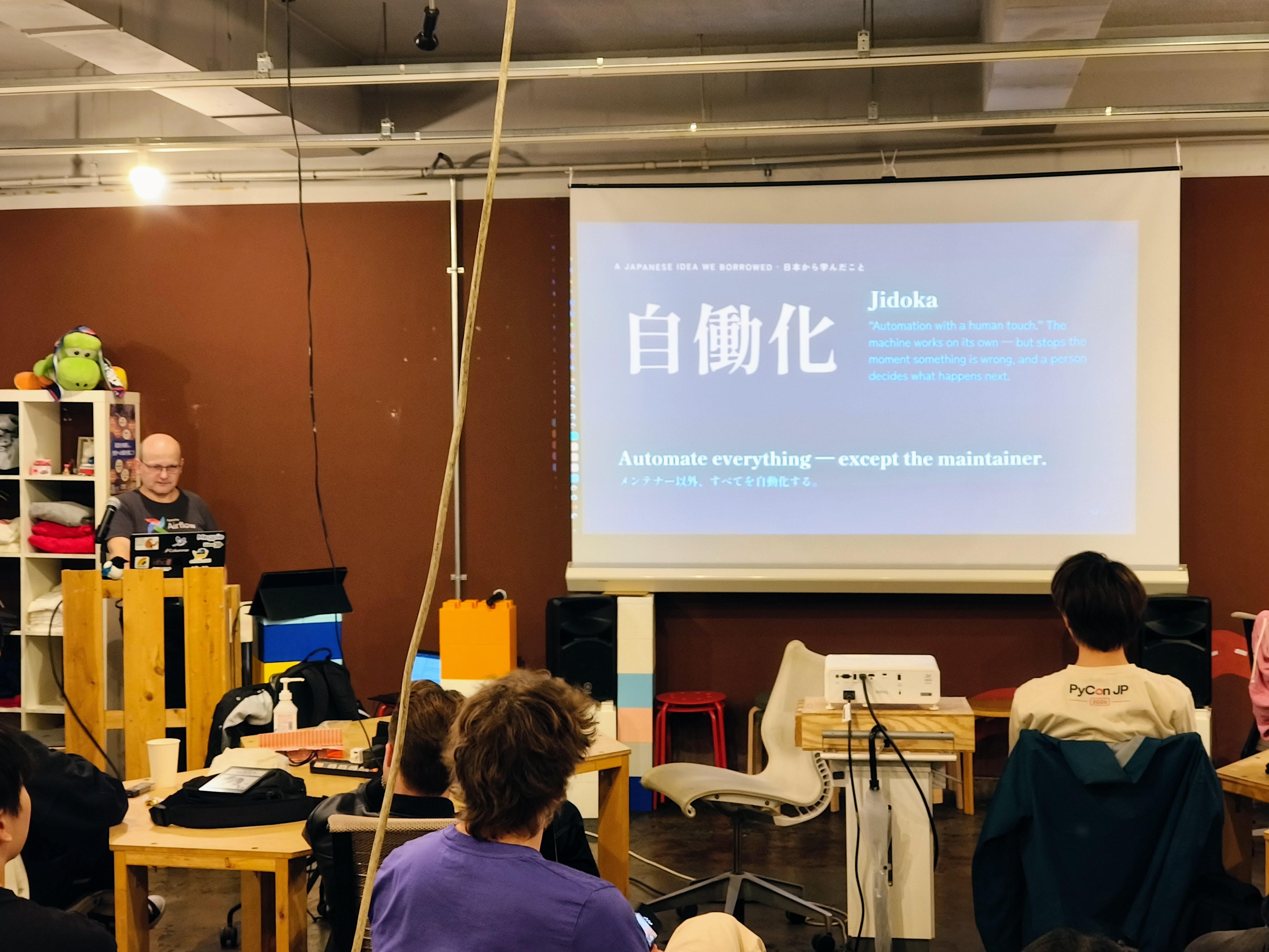
Tokyo Python got two Apache Airflow people in one room on Monday night. Wei Lee, who joined the meetup recently and contributes to Airflow, talked about the platform itself. Jarek Potiuk, a long-time member of the Airflow PMC and chair of the new Apache Magpie project, talked about what AI coding agents are doing to a project that now has far more contributors than reviewers.
How the two Apache halves fit together - Wei explained what Airflow is for; Jarek explained what happens to a project like that once writing code stops being the expensive part.
A cron job that fails silently
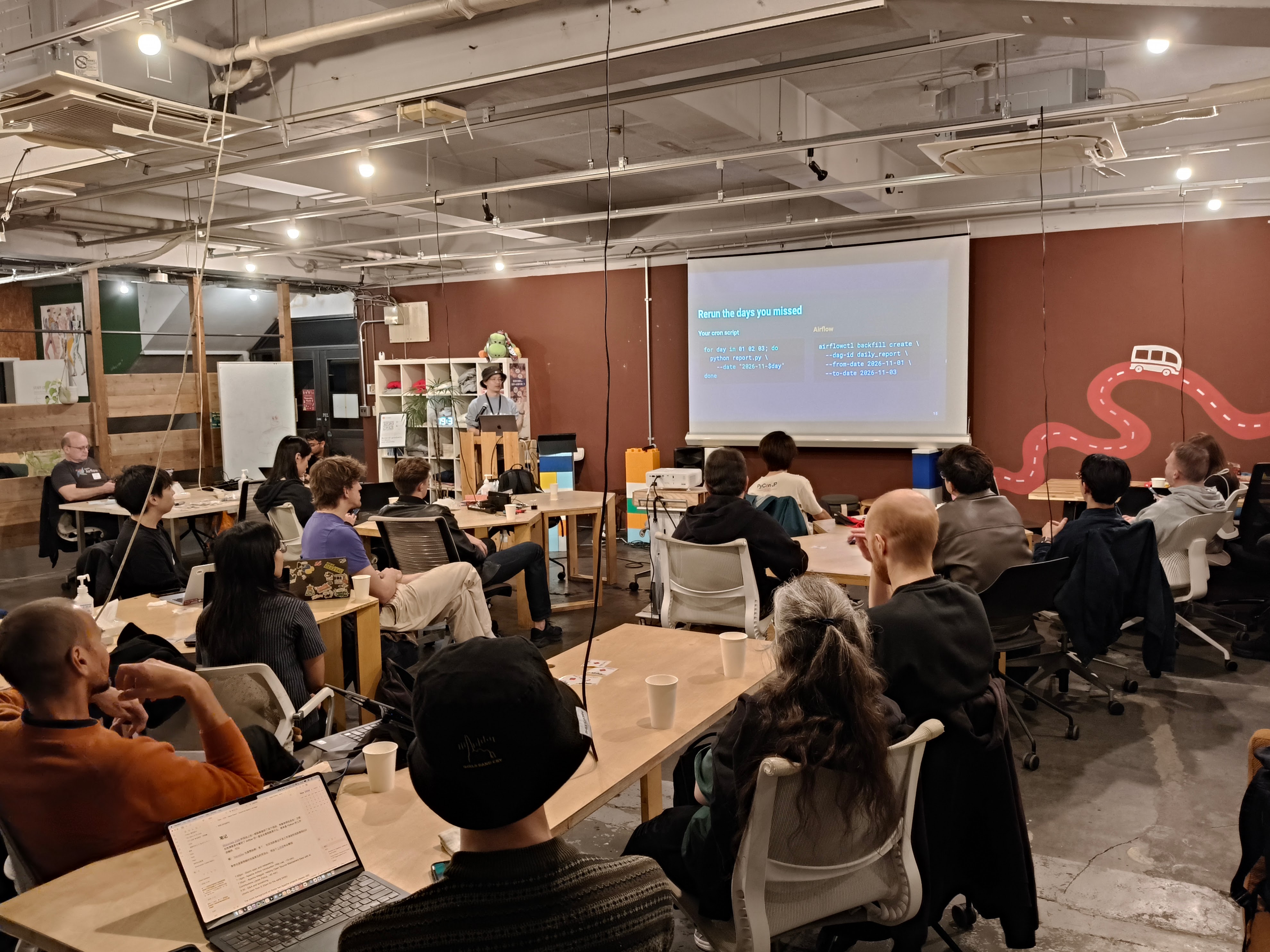
Computers aren’t perfect. Jobs fail, and without the right tools you often find out days later, when someone asks why the numbers have not moved since Tuesday.
Wei opened with exactly that: a job that dies quietly, and the flow-on effects downstream of it quietly going stale. Airflow’s answer is robust and it works. Retries, alerts when a run fails, a UI that shows what ran and what didn’t, and backfills for the gap once you finally notice.
What I like about the project is that it doesn’t sit still. I made a similar point at PyCon JP in August about the team’s appetite for new technology, and it shows again. Airflow is adding support for AI workflows, along with experimental support for writing workflows in TypeScript, Go and Java.
Wei finished with an ask rather than a summary. The Japanese translation of Airflow’s interface is about half done, and the other half is a reasonable first contribution if you are looking to make one.
Thirty security reports became six hundred
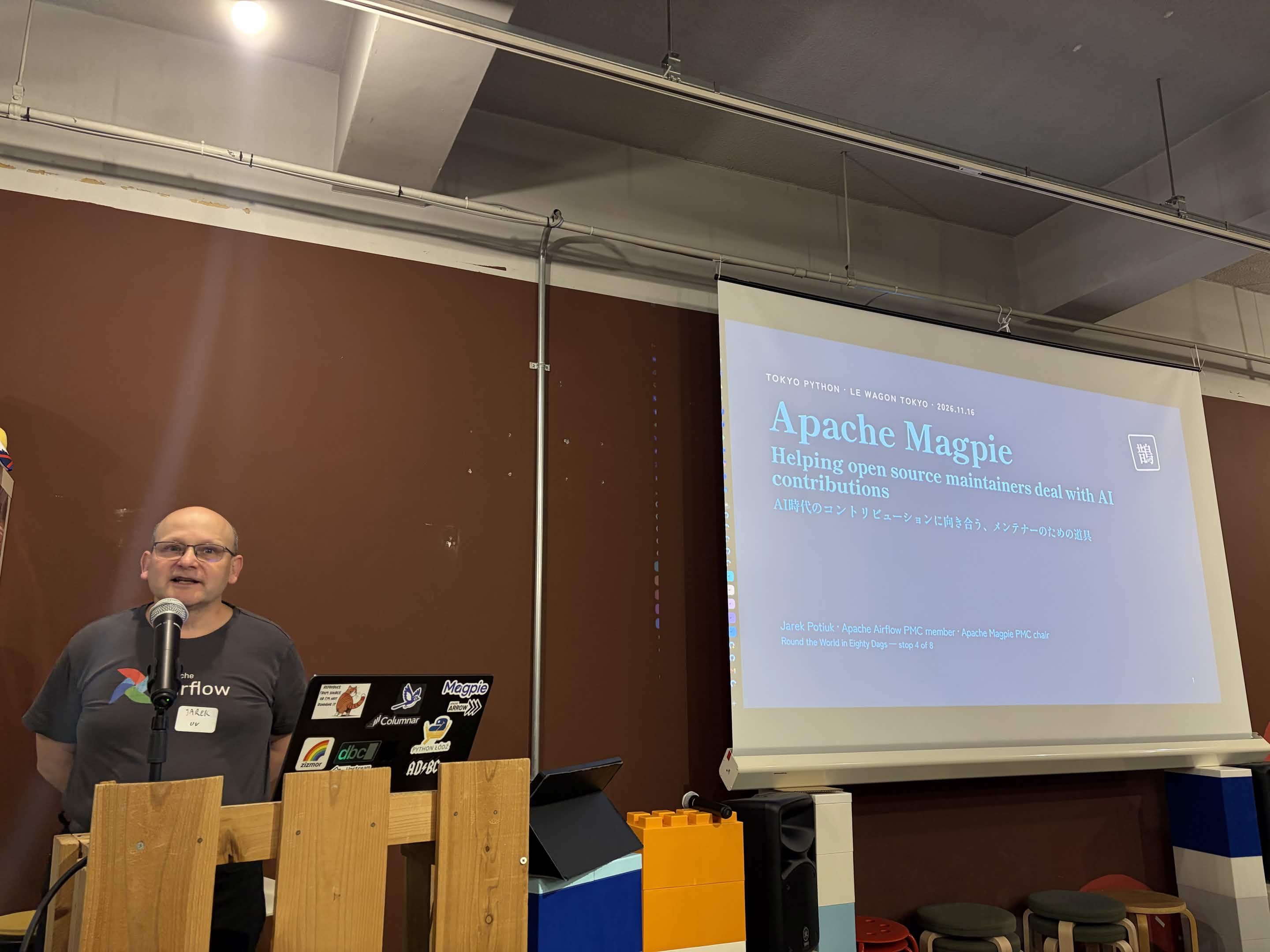
Airflow used to see around 30 security reports a year. In the past year it has seen more than 600. Pull requests are up tenfold in four months.
The project has always wanted fixes from its users rather than complaints about its bugs, and that is a large part of why it works. Coding agents made contributing cheap, and the volume now outruns the people reading it. For a project that spent years asking people to send more, that is an odd reward.
Nothing about a volunteer project lets you absorb that by hiring. Apache Magpie, a new project under the Apache Software Foundation, is one attempt to deal with it: agents doing the mechanical parts of maintenance, so people can spend their time on the work that needs judgment.
Jarek’s point, as I heard it: the AI can do the typing now, but the humans still need to do the talking.
I have been using agents on my own projects this year, and the part that never gets faster is reading what they produce. Open source maintainers now meet that at a scale that is hard to imagine.
Jarek ran over. I had half an eye on the clock and let him have the floor anyway, because it’s not that often we get to hear about projects of this size. We could squeeze in one question before he had to leave. The rest of it happened on the way out, with a crowd around him at the door. I believe Jarek could have spoken about this all night.
Thanks
Thanks to Jarek for putting Tokyo on his Around the World in 80 DAGs route, and to Wei for suggesting we invite him in the first place. Thanks to Tatsuya Ogawa and Le Wagon for the venue in Meguro and the facilities these events depend on, to Prashant Kandel for the live translation app that let Japanese speakers follow the talks (more on this soon), and to Ai-san for helping with organisation, on the night and in the lead up.
Thanks as well to our sponsors, TokyoDev and KaiMail. Let’s keep the Python language at the top of TokyoDev’s annual developer survey.